
Important Bike Features Every Rider Should Know Before You Buy
Most people shopping for their first motorcycle fall in love with the way it looks in the showroom. The paint job catches the light, the exhaust note sounds right, and the decision feels done before the salesperson even finishes the pitch.
A few months later, some of those same riders find themselves googling why their bike struggles on wet roads, or wishing it had a fuel gauge instead of a guessing game. The features that felt like small print on the spec sheet turn out to matter a lot more once the bike is actually part of daily life.
This guide breaks down the bike features that genuinely affect safety, comfort, and running costs, so the next purchase is based on more than just how good the bike looks parked outside a cafe.
Why Understanding Bike Features Matters More Than the Price Tag
Two motorcycles can sit in the same price bracket and still ride, brake, and hold up completely differently over time. The difference usually comes down to features buried a few lines down the spec sheet, not the headline number everyone talks about.
A rider who understands what each feature actually does is in a much stronger position at the showroom. Questions become sharper, comparisons become fairer, and the eventual choice fits the way that rider actually plans to use the bike.
This matters even more in a market where several bikes from different brands often share similar engine displacement and similar-looking price tags. When the headline numbers look nearly identical, the features underneath become the actual deciding factor.
Frame and Build Quality Features
A motorcycle's frame holds everything together, quite literally, and its design affects handling stability far more than most riders realize. A stiffer frame resists flex under hard cornering or braking, which keeps the bike feeling planted rather than vague.
Weight distribution between the front and rear wheel also plays into how a bike behaves. A front-heavy bike tends to feel more planted at speed but can feel less agile in tight turns, while a more balanced distribution usually makes for an easier bike to live with day to day.
Engine and Powertrain Features
Engine Type and Cooling
Most commuter and sports bikes in this segment use either air-cooled or liquid-cooled single-cylinder engines. Air-cooled engines are simpler and cheaper to maintain, while liquid-cooled engines handle sustained high-RPM running and hot weather with less risk of overheating.
For city riders who mostly deal with stop-and-go traffic, either option tends to work fine. For riders who push the bike hard on highways or in genuinely hot conditions, liquid cooling holds its temperature more consistently.
Fuel Delivery: Carburetor vs EFI
Fuel injection, usually shortened to EFI, meters fuel electronically rather than relying on a mechanical carburetor. It generally means smoother throttle response, easier cold starts, and better fuel efficiency.
Carbureted engines are simpler to repair with basic tools, which still matters in areas where authorized service centers are not always close by. EFI systems need a bit more specialized diagnostic equipment, but most riders find the smoother power delivery worth the tradeoff.
Gearbox and Transmission
A five or six-speed gearbox with well-spaced ratios makes a bigger difference to everyday riding than most buyers expect. Tightly spaced lower gears help with quick city starts, while a taller top gear keeps the engine relaxed at highway speed instead of screaming near redline.
Braking System Features
Disc Brakes vs Drum Brakes
Disc brakes dissipate heat faster and offer more consistent stopping power than drum brakes, especially during repeated hard braking. A front disc brake alone is a meaningful upgrade over a fully drum-braked setup, and a disc on both wheels is better still.
ABS: The Feature Worth Paying Attention To
Anti-lock braking systems prevent the wheels from locking up under hard braking, which keeps the bike stable instead of sliding out. This is not a marketing gimmick. A large study by the Insurance Institute for Highway Safety found that motorcycles equipped with ABS were involved in 22 percent fewer fatal crashes than the same models without it.
That single statistic is reason enough for most riders to treat ABS as a priority rather than an optional extra, especially for anyone riding regularly on wet roads or unpredictable city traffic.
Single-Channel vs Dual-Channel ABS
Single-channel ABS usually covers just the front wheel, while dual-channel ABS manages both wheels independently. Dual-channel systems offer more complete control during emergency braking, particularly when a rider grabs both brakes at once out of instinct.
Suspension and Handling Features
Front Suspension
Telescopic forks are the standard setup on most bikes in this class, absorbing bumps through a pair of sliding tubes. Upside-down, or USD, forks flip that design and generally offer stiffer, more precise handling, which is why they show up more often on sportier models.
Rear Suspension
A mono-shock rear suspension tends to handle bumps and mid-corner corrections more smoothly than a traditional dual-shock setup, though dual shocks remain common and perfectly serviceable on many commuter bikes.
Ground Clearance
Ground clearance decides how confidently a bike handles speed breakers, potholes, and uneven road edges, which are a daily reality on most roads. Riders who frequently deal with rough patches should weigh this feature more heavily than the spec sheet's headline numbers.
Tyres and Wheels
Tubeless vs Tube-Type Tyres
Tubeless tyres deflate more gradually when punctured, giving a rider more warning and control compared to tube-type tyres, which can lose air suddenly. This difference becomes especially important at higher speeds, where a sudden deflation is far more dangerous.
Tyre Width and Contact Patch
Wider tyres generally offer a larger contact patch with the road, which translates into better grip under acceleration, braking, and cornering. Narrower tyres, in exchange, tend to feel lighter and easier to maneuver at low speed.
Instrument Cluster and Electronics
Digital vs Analog Displays
A digital instrument cluster typically packs in more information than an analog dial can, including trip meters, average mileage, and sometimes a gear position indicator. Semi-digital clusters blend both, keeping an analog tachometer alongside a digital readout for everything else.
Side-Stand Engine Cut-off
This small safety feature prevents the engine from running, or shuts it off automatically, if the bike is put into gear while the side stand is still down. It sounds minor until it prevents an embarrassing, and occasionally dangerous, low-speed tip-over.
Lighting Features
LED headlights draw less power and generally last longer than halogen bulbs, while also lighting the road more clearly at night. Daytime running lights, often shortened to DRLs, improve how visible a bike is to other drivers even in daylight.
Clear, bright tail lights and indicators matter just as much, since being seen by the vehicle behind is just as important as seeing the road ahead.
Comfort and Ergonomic Features
Seat Height and Design
Seat height affects how confidently a rider can plant their feet at a stop, which matters more in heavy traffic than most buyers consider before test riding. A seat that is too tall for a rider's height quietly undermines their confidence in everyday situations.
Handlebar Position
Handlebars set too low force a rider into a hunched posture that gets uncomfortable fast, while bars set too high can feel unstable at speed. A natural, neutral reach tends to suit the widest range of riders.
Kerb Weight
A lighter bike is easier to maneuver at low speed and less tiring in traffic, while a heavier bike often feels more planted at highway speed. Neither is universally better, and the right balance depends on where the bike will spend most of its time.
Storage and Practicality Features
Fuel tank capacity decides how often a rider needs to stop for petrol, which matters more on longer rides than daily commutes. Under-seat storage, even a small amount, is genuinely useful for carrying a rain cover, documents, or a spare pair of gloves.
A USB charging port, increasingly common even on budget-friendly bikes, is a small feature that solves a real everyday problem for riders who rely on their phone for navigation.
Exhaust and Emission Standards
Modern bikes are built to meet increasingly strict emission standards, which generally also means more efficient combustion and better fuel economy as a side benefit. A well-engineered exhaust system balances performance, noise levels, and compliance without needing aftermarket modification.
Riders sometimes overlook this feature entirely, but a bike built to a stricter emission standard tends to run cleaner and more efficiently over its lifetime, which quietly pays off at the fuel pump.
Safety Features Beyond ABS
Combined braking systems, sometimes labeled CBS, apply both brakes together from a single lever, which helps less experienced riders avoid over-relying on just the front or rear brake. An engine kill switch lets a rider shut down the engine instantly in an emergency without fumbling for the ignition key.
A side stand indicator on the instrument cluster is a small addition that quietly prevents riders from pulling away with the stand still down, especially in low light or when distracted.
Pillion Comfort and Passenger-Friendly Features
Many riders shop for a bike thinking only about their own comfort, then realize months later that a passenger seat was an afterthought in the design. A wider, properly padded pillion seat, along with grab rails and footpegs positioned sensibly, matters a great deal to anyone who regularly rides two-up.
Rear suspension preload adjustability, where available, also helps the bike maintain its handling character when carrying extra weight. A bike that handles beautifully solo but wallows under passenger load is not as well rounded as its spec sheet suggests.
Maintenance-Friendly Design Choices
Some features matter less for the ride itself and more for what happens after the ride, once the bike needs servicing. Easy access to the air filter, a straightforward chain adjustment process, and widely available spare parts all affect the real cost of ownership over time.
A bike with excellent features but poor parts availability can become a frustrating ownership experience, regardless of how well it rides on day one. This is worth asking about directly at the dealership rather than assuming it will not matter.
Bike Features Checklist
|
Feature |
Why It Matters |
|---|---|
|
Engine cooling |
Liquid cooling handles sustained heat and highway riding better |
|
Fuel delivery (EFI) |
Smoother throttle response and better fuel efficiency than carburetors |
|
Disc brakes |
Faster heat dissipation and more consistent stopping power |
|
ABS |
Meaningfully reduces the risk of a fatal crash during hard braking |
|
Suspension type |
Affects how the bike absorbs bumps and handles corners |
|
Ground clearance |
Decides confidence over speed breakers and potholes |
|
Tubeless tyres |
Deflate gradually on a puncture instead of suddenly |
|
Digital cluster |
Packs in more trip and performance information at a glance |
|
LED lighting |
Better visibility at night and to other road users in daylight |
|
Seat height and kerb weight |
Directly affects rider confidence and low-speed control |
Which TARO Features Stand Out?
TARO's Bangladesh lineup carries most of these features across its current models, which is worth checking directly on TARO Bangla's website when comparing specific trims.
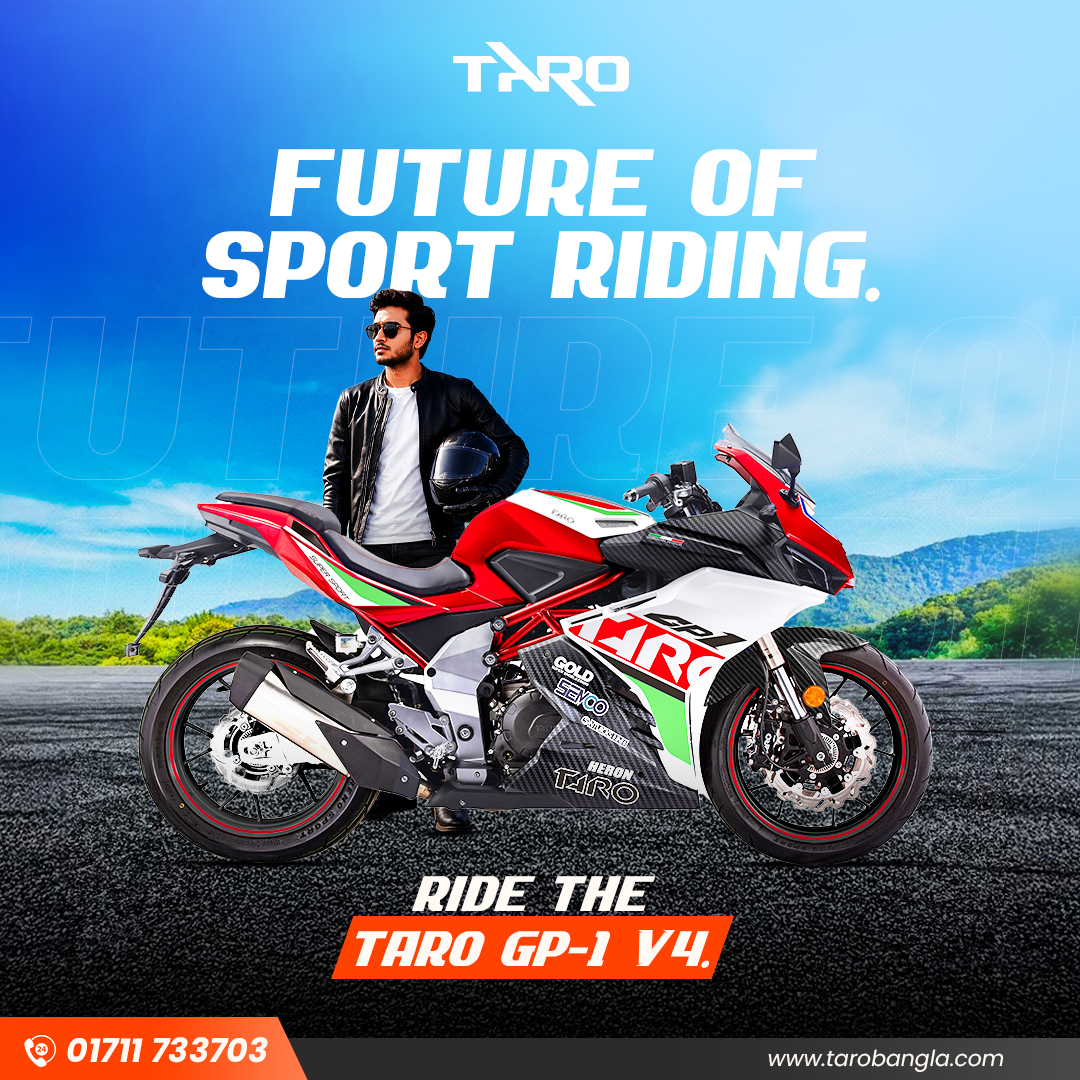
TARO GP1 Version 4
The GP1 Version 4 runs a liquid-cooled, fuel-injected 165cc engine paired with dual-channel ABS and tubeless tyres, which puts it firmly among the better-equipped options in its price range. Its digital instrument cluster covers the essentials a sportier rider would expect.
TARO GP 2
The GP 2 carries the same fully-faired, sports-oriented approach with a liquid-cooled engine and tubeless tyres, aimed at riders who want sportbike styling without stepping up to the GP1's larger displacement.
TARO Ranger and Grand Imola ADV 165
The Ranger and the
Common Mistakes When Evaluating Bike Features
Focusing only on top speed and horsepower is a common trap. Those numbers make for exciting conversation, but braking, suspension, and ergonomics affect a rider far more often than outright speed ever will.
Skipping a proper test ride is another mistake. Features read differently on paper than they feel on the road, and something like seat height or handlebar reach is nearly impossible to judge from a spec sheet alone.
Assuming every bike in a lineup shares the same features is also risky. Trims and versions within the same model line often differ in braking systems, tyre type, or instrument cluster, so it pays to confirm the exact configuration before deciding.
Relying entirely on a salesperson's summary, without cross-checking the official spec sheet, can also lead to surprises later. A quick comparison against the manufacturer's published specifications takes only a few minutes and avoids most misunderstandings before they turn into regret.
FAQs
What is the most important safety feature on a motorcycle?
ABS is widely considered the most impactful safety feature, given the documented reduction in fatal crash rates when it is fitted.
Is EFI better than a carburetor?
EFI generally offers smoother throttle response and better fuel efficiency, though carbureted engines remain simpler and cheaper to service in areas with limited access to specialized tools.
Do tubeless tyres really matter?
Yes. Tubeless tyres deflate more gradually after a puncture, giving the rider more control compared to a sudden deflation from a tube-type tyre.
Is a digital instrument cluster worth it?
For most riders, yes. It provides more useful information at a glance, including trip data and, on some models, a gear position indicator.
Does ground clearance matter for city riding?
It matters more than most riders expect, especially on roads with frequent speed breakers, potholes, or uneven patches.
What should beginners prioritize when checking bike features?
Beginners generally benefit most from ABS, disc brakes, comfortable seat height, and manageable kerb weight, since these features directly affect confidence and control.
Are LED headlights worth the upgrade?
Yes. They offer better night visibility and last longer than halogen bulbs, and daytime running lights improve how visible the bike is to other drivers.
Should I prioritize features over engine displacement?
For most everyday riders, yes. Braking, suspension, and ergonomics affect daily comfort and safety far more consistently than a slightly larger engine displacement number.
How can I confirm which features a specific bike trim actually has?
The safest approach is to check the manufacturer's official spec sheet for that exact trim and compare it directly against what a salesperson describes, since features can vary between versions of the same model.
Conclusion
A motorcycle is more than the sum of its horsepower figure and its paint scheme. The features that actually shape day-to-day riding, from ABS and disc brakes to seat height and suspension, deserve just as much attention as the numbers that headline the brochure.
Taking the time to understand what each feature does, rather than skimming past it on a spec sheet, leads to a bike that fits the way it will actually be ridden. That is a far better foundation for a purchase than styling alone.
The right combination of features will not just make a bike look good parked outside a cafe. It will make every ride safer, more comfortable, and easier to live with long after the new-bike excitement wears off.