
Horsepower vs Torque: What's the Difference?
Every rider has stood in a showroom staring at a spec sheet, trying to figure out what those two numbers actually mean. One bike boasts higher horsepower, another brags about torque, and the salesperson throws around both terms like the rider is supposed to already know the difference.
Most riders don't. They see the numbers, nod politely, and buy based on looks or price instead. That is a mistake, because horsepower and torque tell two very different stories about how a motorcycle will actually feel on the road.
This guide breaks both terms down in plain, rider-friendly language, so the next spec sheet actually makes sense before the test ride, not after.
What Is Torque in a Motorcycle?
Simple Definition of Torque
Torque is the rotational force the engine produces at the crankshaft. Think of it as the twisting push that gets the wheels turning in the first place. It is measured in Newton-meters (Nm), and it is essentially a measure of muscle rather than speed.
Torque matters most the moment a bike starts moving. A high-torque engine can pull away from a standstill, climb a slope, or carry extra weight without straining, because it is generating strong rotational force even at low engine speeds.
How Torque Affects a Bike
-
Initial acceleration, since torque decides how strongly the bike launches from a stop
-
Pulling power when overtaking or merging into traffic
-
Carrying additional load, such as a passenger or luggage
-
Uphill riding, where the engine needs to fight gravity without losing momentum
-
Low-speed responsiveness in stop-and-go city traffic
A simple way to picture torque is a wrench turning a bolt. The longer the wrench and the harder the push, the more twisting force is applied. A motorcycle engine works the same way, except the piston stroke and combustion force replace the hand on the wrench.
What Is Horsepower in a Motorcycle?
Simple Definition of Horsepower
Horsepower measures how quickly an engine can perform work over time. Where torque is about strength, horsepower is about speed and sustained output. It is calculated from torque and engine RPM combined, which is why the two numbers are always connected rather than separate.
As RPM climbs, an engine can turn a given amount of torque into more horsepower, which is why sportier bikes are tuned to rev high. The relationship between engine speed and power output is what defines a motorcycle's character, whether it feels relaxed or aggressive.
How Horsepower Affects a Bike
-
Higher-speed performance once the bike is already rolling
-
Acceleration at higher RPM, past the initial launch
-
Top-speed potential on open roads
-
Highway performance, including overtaking at speed
A bike with strong horsepower numbers will keep pulling as the revs climb, rather than running out of breath. That makes it better suited to sustained highway riding than a low-horsepower machine, even if the low-horsepower bike feels punchier off the line.
Horsepower vs Torque: Key Difference
|
Factor |
Torque |
Horsepower |
|---|---|---|
|
Meaning |
Rotational force |
Rate of doing work |
|
Main Effect |
Pulling and initial acceleration |
High-speed performance |
|
Important For |
Low and mid-range response |
Higher-speed performance |
|
Measured In |
Nm |
HP |
|
Rider Experience |
Stronger pull |
Faster sustained acceleration |
How Torque and Horsepower Work Together
Horsepower is not a separate, independent number. It is calculated directly from torque and engine RPM, so the two figures are always tied together rather than competing against each other.
Engine RPM plays the connecting role. At low RPM, torque dominates the riding feel. As RPM rises, that torque converts into horsepower, and the bike's character shifts from pulling power to sustained speed.
A motorcycle needs both numbers working in balance. A bike with big torque but weak horsepower will feel strong off the line and then flatten out early. A bike with big horsepower but soft torque will feel sluggish until the revs climb, then come alive.
This is exactly why looking at only one number on a spec sheet can be misleading. Two bikes with the same horsepower figure can feel completely different to ride, depending on where in the rev range that power and torque actually arrive.
A useful way to check this balance is to look at where the peak torque and peak power figures sit on the spec sheet. If both numbers arrive close together in the rev range, the engine will feel like it runs out of steam quickly once past that point. If peak torque arrives early and peak power arrives later, the engine has a wider, more usable spread of performance across the whole rev range.
This is also why two riders can disagree about how a bike feels, even on the exact same model. A rider who mostly short-shifts and stays in the low and mid RPM range will experience the torque-heavy side of the engine's character. A rider who holds each gear longer and revs closer to redline will feel the horsepower side instead.
Why Peak Numbers Alone Can Mislead a Buyer
Spec sheets love to headline the single biggest number, whether that is peak horsepower or peak torque. A bike advertised as producing an impressive horsepower figure sounds appealing, but that number only tells you the ceiling, not how the engine behaves getting there.
Two engines can share an identical peak horsepower figure and still feel completely different on the road. One might reach that peak gradually with a broad, forgiving torque curve, while the other holds back until deep into the rev range and then delivers everything at once. The second engine will feel flat and unresponsive in everyday riding, even though its spec sheet looks just as strong.
This is why experienced riders pay attention to the RPM at which peak torque and peak power are produced, not just the numbers themselves. An engine that reaches peak torque at a low RPM will feel far more relaxed in daily traffic than one that needs to be revved hard to unlock its strongest pulling power.
Which Is More Important for a Motorcycle?
For City Riding
Low and mid-range torque matters most in the city. It gives smooth acceleration away from traffic lights, easy filtering through slow-moving traffic, and less clutch and gear work at low speeds.
For Highway Riding
Horsepower takes priority once speeds climb. Highway riding rewards high-speed stability and strong mid-to-high RPM performance, which is where a horsepower-focused engine does its best work.
For Touring
Touring riders need a balance of both. Comfortable cruising over long distances, plus the ability to carry a passenger or luggage without losing performance, calls for an engine that delivers torque low down and horsepower up top.
For Sports Riding
Sports riding leans on power delivery and high RPM performance. Acceleration and responsiveness through the gears matter more than outright pulling strength from a standstill, since sports bikes rarely idle in traffic.
Torque vs Horsepower for Different Riding Conditions
|
Riding Condition |
More Important |
|---|---|
|
City traffic |
Torque |
|
Starting from a stop |
Torque |
|
Uphill riding |
Torque |
|
Carrying a passenger |
Torque |
|
Highway acceleration |
Horsepower + Torque |
|
High-speed riding |
Horsepower |
|
Sports riding |
Horsepower + Torque |
|
Long-distance touring |
Balanced combination |
How Engine CC Relates to Horsepower and Torque
Engine displacement, measured in cubic centimeters (cc), refers to the total volume the pistons sweep inside the cylinders. A bigger cc figure generally means more room for air and fuel to combust, which can translate into more power.
Higher cc does not automatically mean better performance, though. Two engines with the same displacement can produce very different torque and horsepower figures depending on tuning, compression ratio, valve design, and fuel delivery.
Tuning is where the real difference shows up. A manufacturer can tune an engine to favor low-end torque for city commuting, or tune the same displacement to favor high-RPM horsepower for sportier riding.
This is why riders should look past the cc number on a spec sheet and check the complete specification, including peak power, peak torque, and the RPM at which each one arrives.
What Should You Check Before Buying a Bike?
-
Maximum horsepower
-
Maximum torque
-
RPM at which peak power is produced
-
RPM at which peak torque is produced
-
Engine CC
-
Kerb weight
-
Gearbox
-
Mileage
-
Riding purpose
These figures only tell the full story when read together. A powerful engine bolted to a heavy bike will not feel as quick as the same engine in a lighter frame, which is why kerb weight belongs on this checklist alongside the raw performance numbers.
Horsepower and Torque in TARO Bikes
TARO's current lineup covers everything from cafe racers to full-fairing sportbikes, and each model is tuned differently depending on what kind of riding it is built for. Here is how torque and horsepower play out across four popular TARO models.
TARO Ranger
The TARO Ranger sits in TARO's cafe racer category, a style built around a relaxed, upright riding position and a single-cylinder engine tuned for smooth, usable power rather than outright top-end speed.
Cafe racer engines in this class are typically set up to deliver their torque low and in the middle of the rev range, which suits the Ranger's laid-back riding character. That makes the bike easy to ride away from a standstill and comfortable to hold at cruising speed.
This tuning makes the Ranger well suited to city commuting and relaxed weekend rides, where a strong mid-range matters more than chasing a high top speed. Riders who want exact peak horsepower and torque figures for the current Ranger 165 should confirm them on TARO's official spec sheet, since cafe racer tunes are periodically updated between model years.
TARO Grand Imola ADV 165
The Grand Imola ADV 165 is TARO's adventure-styled scooter, built to bridge the gap between city commuting and more spirited weekend riding. Its 165cc engine is tuned to balance everyday usability with a bit more punch than a standard commuter scooter.
Torque and power are balanced here rather than skewed heavily toward one side, which fits the scooter's do-everything positioning. That balance is what allows it to feel comfortable weaving through city traffic while still holding its own on the highway.
For city use, the low-end response makes stop-and-go riding effortless. On the highway, the engine has enough top-end to maintain a confident cruising speed. For adventure-style outings on rougher roads, the broader spread of usable power reduces how often the rider needs to shift or downshift for a burst of acceleration.
TARO GP 2
The TARO GP 2 is a full-fairing sportbike built around a 149.8cc liquid-cooled single-cylinder engine. TARO's published figures put peak power at around 16 bhp near 8,500 rpm, with maximum torque of roughly 14.5 Nm arriving in the 7,000 to 8,000 rpm range.
That kind of tuning is performance-oriented rather than torque-heavy, which fits the GP 2's sports positioning. Power builds progressively as the revs climb, rewarding a rider who is comfortable working through the six-speed gearbox rather than relying on low-end grunt.
This power delivery suits sports riding on smooth roads, where higher RPM performance and quick throttle response matter more than pulling a passenger uphill. It is a bike that rewards spirited riding over heavy commuting duty.
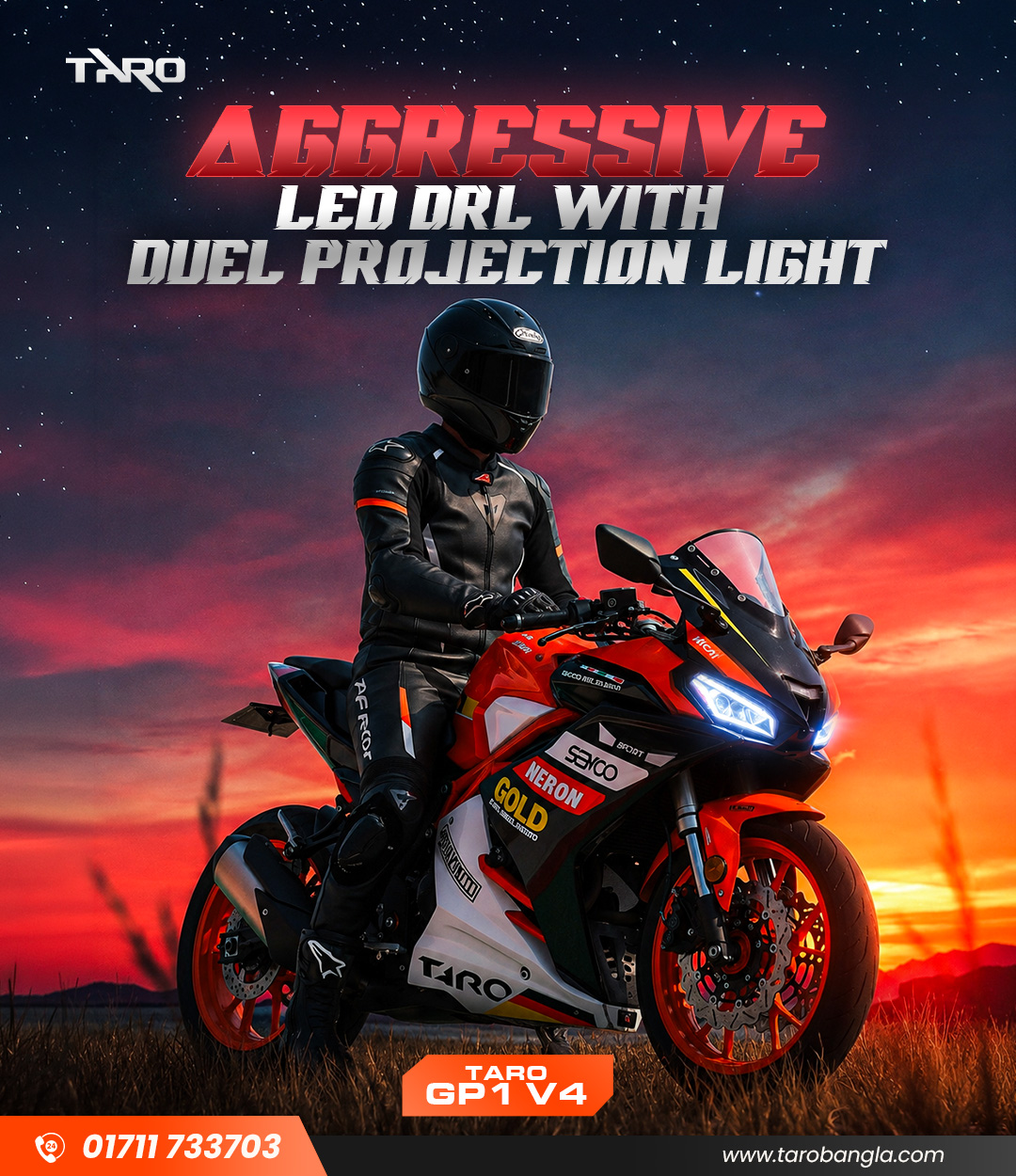
TARO GP1 Version 4
The TARO GP1 Version 4 steps up the displacement to a 165cc liquid-cooled single-cylinder engine with EFI. TARO's figures list a peak output of around 21.5 bhp at 8,500 rpm and maximum torque of about 18 Nm at 6,500 rpm, a noticeable jump over the GP 2.
That extra torque, arriving earlier in the rev range than on the GP 2, gives the GP1 V4 stronger mid-range pull without sacrificing the high-RPM power that defines the GP series. It is the more performance-focused option between the two, with a six-speed gearbox to make the most of that output.
This engine output translates into confident overtaking, a claimed top speed in the 120 to 130 km/h range, and enough performance character to justify its position at the top of TARO's sportbike lineup. It is best suited to riders who want genuine sports-oriented performance rather than a purely commuter-focused machine.
Common Misconceptions About Horsepower and Torque
More horsepower does not always mean a better bike. A high-horsepower machine that struggles at low RPM can feel worse in daily traffic than a lower-horsepower bike with strong torque. Riding enjoyment depends on how the power arrives, not just how much of it exists on paper.
More torque does not automatically mean a faster top speed either. Top speed depends heavily on horsepower and gearing, not just how strongly the bike pulls off the line. A torque-heavy bike can feel quick in the city and still be outpaced on the highway by a horsepower-focused machine.
Higher cc does not guarantee higher performance. A larger engine that is tuned conservatively can be outperformed by a smaller, more aggressively tuned one. Displacement is a starting point for performance, not a guarantee of it.
Peak numbers do not tell the entire riding experience. Where in the rev range that peak arrives, and how smoothly the power builds up to it, matters just as much as the number itself. A bike that reaches its peak torque early and holds it across a wide range will always feel friendlier to ride than one that only delivers its best figures in a narrow band near redline.
FAQs
What is torque in a motorcycle?
Torque is the rotational force an engine produces at the crankshaft, measured in Newton-meters. It determines how strongly a bike can pull, accelerate from a stop, and carry load.
What is horsepower in a motorcycle?
Horsepower measures how quickly an engine can perform work, combining torque and RPM into a single figure. It reflects sustained performance, especially at higher speeds.
Is torque or horsepower more important for bikes?
Neither is more important on its own. Torque matters more for low-speed riding and pulling power, while horsepower matters more for sustained high-speed performance. The right balance depends on how the bike will be ridden.
Does higher horsepower mean higher top speed?
Generally yes, since horsepower reflects sustained power output at higher RPM, which is what carries a bike to its top speed. Gearing and aerodynamics also play a role.
Does more torque mean better acceleration?
More torque generally means stronger initial acceleration, especially from a standstill. Sustained acceleration at higher speeds depends more on horsepower.
Is torque more important for city riding?
Yes. City riding involves frequent stops, slow traffic, and short bursts of acceleration, all of which favor an engine with strong low and mid-range torque.
Is horsepower more important for highway riding?
Yes. Sustained speed, overtaking, and highway stability rely on an engine that keeps producing strong power as RPM climbs, which is where horsepower matters most.
How are horsepower and torque related?
Horsepower is calculated from torque and engine RPM. As RPM increases, a given amount of torque produces more horsepower, which is why the two figures always move together rather than independently.
Conclusion
Torque determines how strongly a motorcycle can pull, while horsepower describes how quickly that work can be delivered as the engine revs climb. Neither number tells the whole story on its own.
The best choice depends on the rider's purpose, road conditions, and riding style. A commuter who mostly rides in city traffic will value a different balance than a rider chasing highway speed or sports performance.
Always evaluate horsepower and torque together with the bike's weight, gearing, engine CC, and overall specifications. That combination, not a single spec sheet number, is what actually decides how a motorcycle feels on the road.