
Complete Guide to Choosing the Right Bike in Bangladesh
Buying a motorcycle in Bangladesh is rarely as simple as picking whatever looks good in the showroom window. A student riding to college five days a week has completely different needs from someone commuting between Dhaka and Gazipur every morning, or a weekend rider planning a trip to Bandarban. Yet a lot of buyers still end up choosing a bike the same way, based on a friend's recommendation or whichever model happens to be trending that month.
That approach works out fine sometimes and badly other times. The right bike depends on your budget, how you actually plan to use it, your height and riding comfort, and how much you are willing to spend on fuel and servicing over the next few years. This guide walks through all of that, section by section, so that by the end you have a clear framework rather than just a list of bike names.
What Should You Consider Before Buying a Bike?
Before comparing specific models, it helps to lay out the factors that actually matter. Most buyers only think about price and looks, then get surprised later by running costs or an uncomfortable seating position.
-
Budget and total ownership cost. The sticker price is only the start. Registration, insurance, fuel, and servicing add up over the years.
-
Riding purpose. A daily city commute, highway travel, touring, and sport riding all call for different bikes.
-
Engine capacity (CC). Bigger is not automatically better. CC should match your riding pattern, not just your ego.
-
Fuel efficiency. Matters more in a country where fuel prices shift often and most riders use their bike daily.
-
Comfort and ergonomics. A bike that feels great for a 10-minute test ride can feel very different after an hour in traffic.
-
Performance. Acceleration, top speed, and handling matter if you ride on highways or enjoy spirited riding.
-
Maintenance requirements. Some engines and components need more frequent, more expensive servicing than others.
-
Availability of parts and servicing. A great bike is a headache if genuine parts are hard to find in your city.
-
Safety features. ABS, tyre quality, and lighting directly affect how forgiving the bike is in real conditions.
Choose a Bike Based on Your Riding Purpose
Once you know your budget range, the next filter should be how you actually plan to use the bike, not how you imagine using it on an ideal weekend.
Best Bike for Daily City Riding
City riding in Dhaka, Chattogram, or any dense urban area is mostly about traffic and maneuverability, not top speed. A lighter bike that can filter through congestion, offers good mileage, and keeps you upright in a comfortable riding position will serve you far better than a heavy sportbike. A practical engine size in the 100cc to 150cc range usually covers daily commuting needs without unnecessary fuel costs.
Best Bike for Highway Riding
Highway riding demands a different set of priorities. Engine performance needs to be strong enough for confident overtaking, and the bike needs to feel stable at sustained higher speeds rather than twitchy. Good braking, ideally with ABS, becomes non-negotiable once you are regularly riding at 80 km/h or more. Riding comfort over longer stretches also matters more here than in city traffic.
Best Bike for Long-Distance Touring
Touring bikes need a riding posture you can hold for hours without your wrists and lower back complaining. A larger fuel tank reduces how often you need to stop, while a suspension setup tuned for comfort rather than pure sport handling makes rough patches of highway bearable. Reasonable ground clearance and some storage or luggage-mounting options round out what makes a bike tour-friendly.
Best Bike for Adventure Riding
Adventure riding, whether that means broken rural roads or the occasional off-tarmac stretch, asks for higher ground clearance and longer suspension travel than a standard road bike. Riding position tends to be more upright, giving better control when the surface gets unpredictable. Durable tyres built for mixed terrain matter just as much as engine output here.
Best Bike for Sports & Performance Riding
Sports and performance riding is where engine output, handling, and braking all get pushed harder than in everyday use. A sportbike's aerodynamic fairing and forward-leaning riding position are built for speed and cornering, not comfort in traffic. If this is your priority, a bike with dual-channel ABS and a proper sport chassis will reward you far more than a commuter model with a sporty paint job.
How to Choose the Right Engine CC?
Engine capacity gets treated like the single most important spec, but it only matters in the context of how and where you ride.
100–125cc Bikes
These are the right call for new riders and anyone whose commute is short and mostly flat. They are light, easy to control at low speed, cheap to run, and forgiving for someone still building road confidence. Mileage in this range is usually the best you will find in the market.
150–160cc Bikes
This is the segment most Bangladeshi riders eventually settle into, and for good reason. It strikes a workable balance between performance and fuel economy, handling both daily city commuting and the occasional highway run without feeling underpowered or overly thirsty.
165cc+ Bikes
Once you move past 165cc, you start getting genuine touring and performance capability, stronger acceleration, and better high-speed stability. It is worth knowing that imported motorcycles above 165cc are still restricted from Bangladeshi roads, but locally manufactured and assembled bikes up to 375cc have been legally permitted since January 2025, according to BanglarBike's summary of BRTA and government policy updates. Riders who tour often, ride two-up regularly, or simply want stronger performance should look at this bracket.
How Much Should You Spend on a Bike?
Setting a realistic budget means looking past the showroom price. Registration and insurance, routine servicing, fuel over a full year, and inevitable accessories like a good helmet, gloves, and a rain cover all add to what you actually spend.
A common mistake is stretching the purchase budget to the absolute limit and then struggling with running costs for the next two or three years. It is usually smarter to buy one segment below your maximum budget and keep some room for the ownership costs that follow. Avoid loading up on unnecessary aftermarket upgrades in the first few months. Ride the bike as it comes, understand what you actually need, and upgrade selectively later if it still feels worth it.
Bike Mileage vs Performance: Which Matters More?
Mileage tells you how far a litre of fuel takes you, and it directly affects your monthly running cost, especially if you ride daily. Performance covers acceleration, top speed, and how the bike responds when you actually need it to, useful for overtaking, climbing an incline, or riding with a passenger.
Neither one is universally "more important." A daily commuter covering short, flat distances should prioritize mileage and will rarely miss the extra performance of a bigger engine. A rider who tours often or rides on open highways will value performance enough to accept somewhat higher fuel consumption. The right balance depends entirely on how you ride, not on which number sounds more impressive in a brochure.
Important Bike Specifications to Check Before Buying
Beyond CC and mileage, a handful of other specifications tell you a lot about how a bike will actually feel and perform:
-
Maximum power and torque indicate how strong the engine feels, particularly at lower rpm where daily riding happens.
-
Kerb weight affects maneuverability in traffic and how easy the bike is to manage at a stop.
-
Seat height determines whether you can plant your feet confidently, especially important for shorter riders.
-
Ground clearance matters on uneven roads and speed bumps, which are common across most of Bangladesh.
-
Fuel tank capacity decides how often you need to stop for fuel on longer rides.
-
Braking system, particularly whether ABS is single or dual-channel, has a direct impact on safety.
-
Suspension setup shapes ride comfort over the poor road stretches many riders deal with daily.
-
Tyre size and type affect grip, stability, and how the bike behaves in rain.
Sports Bike vs Adventure Bike vs Commuter Bike
|
Bike Type |
Best For |
Main Advantage |
|---|---|---|
|
Commuter |
Daily city riding |
Economy |
|
Sports |
Performance |
Handling and power |
|
Adventure |
Touring and adventure |
Comfort and versatility |
None of these categories is objectively "the best" bike. Each is built around a different riding priority, so the right choice comes down to matching the category to your actual weekly riding pattern rather than picking whichever looks the most exciting.
New Bike vs Used Bike: Which Should You Choose?
A new motorcycle comes with a full warranty, no hidden wear, and the peace of mind of being the only owner. You also get the latest features and, in most cases, easier access to financing through the dealership.
A used bike can offer real savings, particularly if you are buying your first motorcycle and want to keep the initial investment low. The trade-off is that you need to inspect it carefully: check the engine for unusual noise, look at tyre wear, verify service history, and confirm that ownership papers and registration are genuinely transferable through BRTA. If anything about the paperwork feels unclear, it is worth walking away rather than assuming it will sort itself out later.
Whichever route you choose, think about long-term ownership. A slightly older bike from a brand with strong local parts availability can often be a smarter buy than a newer bike from a brand with a thin service network in your area.
Safety Features to Look For in a Motorcycle
Safety is not just about riding carefully, though that matters too. It is also about whether the bike itself is built to help you avoid trouble in the first place.
-
A braking system with good stopping power under both dry and wet conditions.
-
ABS, ideally dual-channel, which prevents wheel lock-up during hard or sudden braking.
-
Tyres with adequate grip and tread depth, replaced before they wear thin.
-
Lighting, including bright LED headlamps and daytime running lights for visibility in Bangladesh's often chaotic traffic.
-
Suspension that keeps both wheels planted on uneven surfaces rather than bouncing the bike off line.
-
Rider ergonomics that let you reach the controls naturally without straining, which matters more than people expect during an emergency stop.
Common Mistakes to Avoid When Buying a Bike
A few patterns show up again and again among buyers who end up regretting their purchase within the first year.
-
Choosing a bike purely because it looks good, without checking whether it fits your actual riding needs.
-
Ignoring riding purpose and buying a sportbike for a slow city commute, or a commuter bike for regular highway travel.
-
Focusing only on engine CC while ignoring weight, ergonomics, and braking quality.
-
Underestimating maintenance costs, especially for bikes with limited local parts availability.
-
Skipping the test ride and relying entirely on specification sheets or online reviews.
-
Not comparing specifications side by side before finalizing a decision.
How to Choose the Right Bike for Your Height and Body Type
A bike that suits a 5'10" rider can feel completely wrong for someone 5'4". Seat height should let you place at least the balls of both feet on the ground when stopped, ideally flat feet if you are newer to riding. Kerb weight matters too, since a heavier bike is harder to balance at low speed or when reversing out of a tight parking spot.
Riding position and handlebar reach affect how naturally your arms and shoulders sit during longer rides, while foot placement should let your knees bend comfortably rather than feeling cramped against the tank. None of this shows up clearly in a spec sheet, which is exactly why sitting on the bike in person, and ideally riding it, matters so much.
Why a Test Ride Is Important Before Buying
No brochure or YouTube review can tell you how a bike actually feels under you. A test ride reveals real seat comfort, how the suspension handles a pothole, and whether the brakes feel confident or vague under real pressure.
It also shows you how the clutch and gearbox behave, whether shifts feel smooth or notchy, and how the engine responds when you open the throttle from a standstill. Riding position that looked fine in a photo might feel cramped or stretched out once you are actually seated. Never skip this step, even if the salesperson insists the specifications speak for themselves.
Taro Bikes for Different Riding Needs
Once you know your budget, riding purpose, and preferred CC range, it helps to see how specific models line up against those needs. Taro's lineup, imported and assembled locally by Taro Bangla, covers a reasonably wide spread of riding styles.
Taro Ranger
The Taro Ranger 165 leans toward touring and long-distance riding, with a 164.9cc liquid-cooled engine, dual-channel ABS, and a riding stance built for covering distance rather than just short hops around the neighborhood.
Taro Grand Imola ADV 165
The Grand Imola ADV 165 is a 165cc ADV-oriented option built around an automatic CVT gearbox, making it a practical choice across city commuting, highway stretches, and light adventure-style riding without the demands of a manual clutch.
Taro GP2
The Taro GP2 is built for sports-oriented riding, aimed at performance-focused riders who want full-fairing styling without stepping up to the larger displacement GP1.
Taro GP1 Version 4
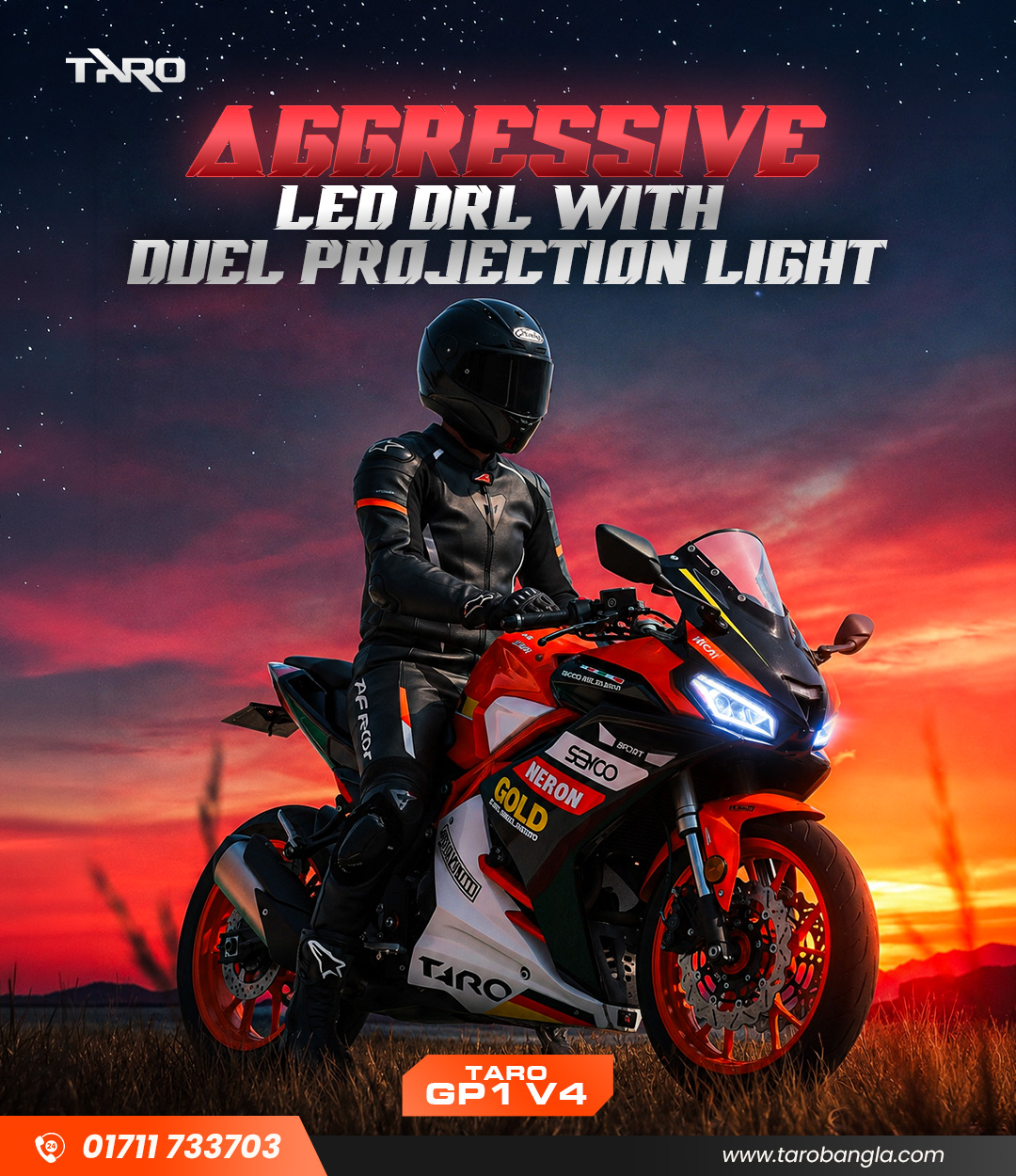
At the top of the range, the Taro GP1 Version 4 combines full sportbike styling with genuine performance hardware, a 249.8cc engine, dual-channel ABS, and a six-speed gearbox with a quick-shifter, aimed squarely at performance-focused riders rather than casual commuters.
Final Checklist Before Buying Your Bike
-
Set your budget, including ownership costs, not just the purchase price.
-
Decide your riding purpose before looking at specific models.
-
Choose a suitable engine CC based on that purpose.
-
Compare specifications across two or three shortlisted bikes.
-
Check real-world mileage figures, not just brochure claims.
-
Check safety features, particularly ABS and tyre quality.
-
Consider maintenance and local parts availability.
-
Take a test ride before making any final decision.
-
Compare total ownership cost, not just the on-road price.
Frequently Asked Questions
Which bike is best for daily riding in Bangladesh? A lightweight 100cc to 150cc commuter with good mileage and easy low-speed handling generally works best for daily city riding.
Which engine CC is best for beginners? Most new riders are better served starting with a 100–125cc bike before moving up once they are comfortable with traffic and basic handling.
Which bike is better for long-distance riding? Bikes with a larger fuel tank, comfortable riding posture, and touring-oriented suspension, generally in the 150cc to 250cc range, handle long distances better than pure commuter models.
What should I check before buying a motorcycle? Budget, riding purpose, engine CC, mileage, safety features, comfort, and parts availability should all factor into the decision before you commit.
Is mileage or performance more important? It depends on your riding pattern. Daily commuters should prioritize mileage, while highway and touring riders benefit more from stronger performance.
Should I buy a new or used bike? A new bike offers warranty and peace of mind, while a used bike can save money if you inspect it carefully and confirm the paperwork is in order.
How do I choose a bike according to my height? Check seat height and kerb weight in person. You should be able to place your feet confidently on the ground when the bike is stationary.
What are the most important motorcycle specifications? Engine CC, power and torque, mileage, kerb weight, seat height, braking system, and suspension are the specifications that matter most in daily use.
Conclusion
Choosing the right bike in Bangladesh comes down to matching a handful of practical factors: your budget, how you actually plan to ride, your comfort and body type, the performance you genuinely need, and how easy the bike will be to maintain over the years. None of these should be decided in isolation, and none of them should be skipped just because a bike looks good in photos.
Once you have narrowed things down using this framework, it is worth comparing a few suitable Taro models against your shortlist before making a final call, and reaching out through Contact Us to arrange a test ride.